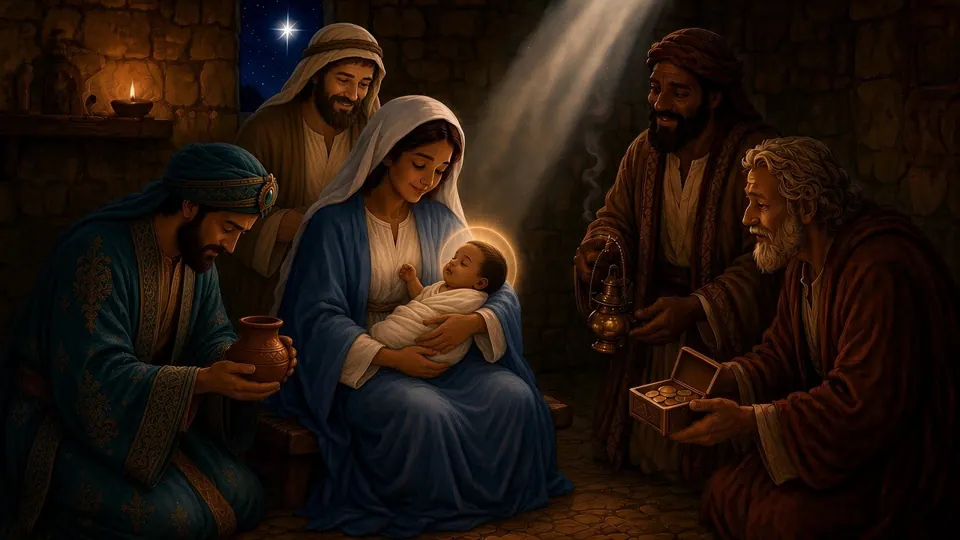
The Wise Men Visit Jesus
Matthew 2:1–12
Matthew sets the visit of the magi against a backdrop of power. Herod the Great, client king under Rome, holds his throne by vigilance and violence. The magi arrive in Jerusalem as foreign sages, likely from the Persian or Babylonian schools that watched the heavens, and ask for the newborn King of the Jews. They have seen his star at its rising and have come to pay him homage.
The question unsettles the king and the city. Herod consults the chief priests and scribes, and they answer from Micah: out of Bethlehem will come a ruler who will shepherd God's people Israel (Mt 2:6; Mic 5:2). Matthew's portrait is pointed. The custodians of Scripture supply the right answer and stay home. The outsiders, guided by a sign in creation and then corrected by the word of Scripture, travel to the child. Herod, meanwhile, interviews the magi in secret and professes a desire to worship that the reader rightly doubts.
When the star reappears and stops over the house, Matthew strains for words to describe their joy. They enter, see the child with Mary his mother, prostrate themselves in worship and offer gold, frankincense and myrrh. A dream turns them away from Herod, and they go home by another way.
The Church's reading: the Epiphany is the manifestation of Jesus as Messiah of Israel, Son of God and Savior of the world. The magi stand for the nations; their coming signals that the Gentiles now enter the family of the patriarchs. The Catechism adds a detail easily missed: they find Jesus only by turning to the Jews and receiving the messianic promise of the Old Testament (CCC 528). The universality of salvation does not bypass Israel; it comes through Israel.
The gifts invite reflection. Early Fathers such as St. Irenaeus and Origen saw in them a confession of who the child is: gold for a king, incense for God, myrrh for a death and burial still to come. That is a patristic reading, not a claim Matthew makes outright, and it should be held as such. Likewise the tradition of three kings with names is venerable but later than Scripture.
For adult life:
Seekers are often closer than insiders. The magi had less information and more desire. If you have been in the Church a long time, ask whether familiarity has replaced longing.
Worship precedes giving. They fell down first and opened their treasures second. Our generosity flows best from adoration.
Creation and Scripture work together. The star brought them to Jerusalem; the Word brought them to Bethlehem. Reason and wonder can start the journey, and revelation completes it.
A real-life step: spend a few minutes before the Blessed Sacrament this week and bring Christ one concrete gift: a decision, a habit or an act of service.
Talk about it
- Who in your life plays the role of the magi, seeking more earnestly than those who already know?
- What does it mean that the nations find Christ only through Israel's promise (CCC 528)?
- How do worship and giving relate in your own spiritual life?
- What would going home by another way look like for you after an encounter with Christ?
Key verse: Mt 2:1–12. Look it up in your Bible.
Illustrations created with Grok (AI) and reviewed by our team. Narration voice: Kokoro TTS (AI), Apache 2.0.