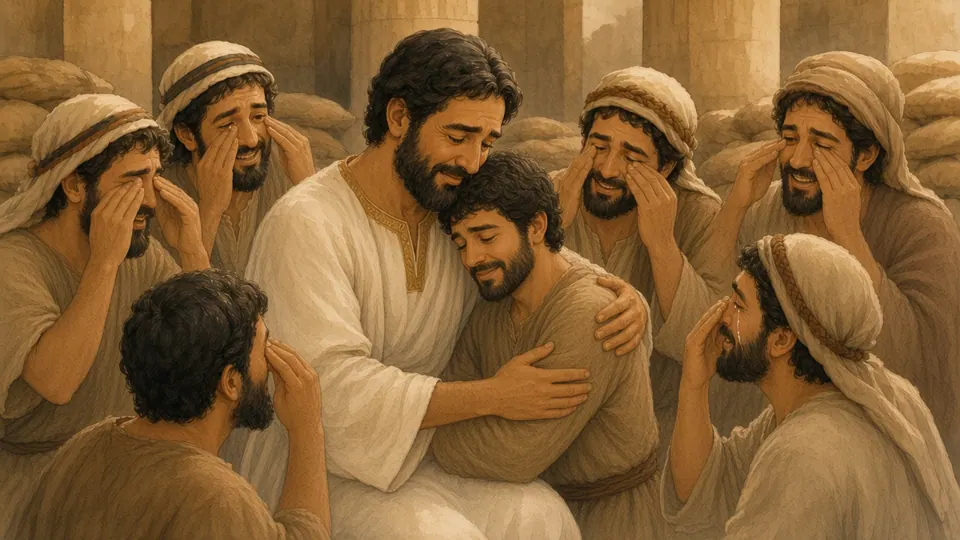
Joseph Forgives His Brothers
Genesis 37:1–36; 45:1–15
Genesis gives Joseph more space than almost anyone. It is a family drama: favoritism, jealousy, betrayal, grief, power, famine, and finally reconciliation. It is also a long meditation on how God works in ordinary, messy human lives.
Genesis 37 begins with a father who plays favorites. Jacob loves Joseph, Rachel's son, more than the rest and makes it obvious with an ornate robe. Joseph, seventeen and not yet wise, tattles and shares dreams of his family bowing to him. The brothers' resentment hardens into hatred.
When Joseph is sent to check on them, they seize the chance. Reuben talks them out of murder and into throwing him into a dry cistern, meaning to rescue him. Judah then proposes selling him to a passing caravan headed for Egypt. Twenty pieces of silver, a robe dipped in goat's blood, a lie to their father. Jacob mourns, and nothing can console him.
In Egypt (Gen 39–44), Joseph rises, falls and rises again: a trusted slave, a man falsely accused, a forgotten prisoner, and finally Pharaoh's governor, managing the empire's grain through seven years of famine. The narrator repeats one line through the darkest stretches: God stayed with Joseph. When his brothers come to buy food, Joseph tests them, and discovers that Judah, the one who sold him, will now offer himself as a slave rather than lose Benjamin and break their father's heart.
Genesis 45 is the release. Joseph clears the room and weeps so loudly the whole palace hears. He reveals himself. His brothers are frozen with fear. He calls them close and tells them to stop tormenting themselves: God sent him ahead to keep people alive. He sends for Jacob and promises to provide for the whole clan. He embraces Benjamin, kisses each brother, and they talk at last.
The Church reads this as a key text on providence. God is not the author of evil, but he can bring good out of it, even out of the sins of others (CCC 311–312). The Catechism quotes Joseph's later summary (Gen 50:20) and points to its fullest example: the Cross, where humanity's worst act became the source of every grace (CCC 312). The Fathers of the Church, St. Ambrose among them, saw Joseph as a figure of Christ: the beloved son, rejected and sold for silver, raised up, and feeding the world. (St. Ambrose, On Joseph; Tradition, not an explicit verse; on typology, CCC 128–130.)
For adult life:
Family wounds are real. Favoritism, sibling rivalry and old betrayals often follow adults into marriages, workplaces and parenting. Joseph's story doesn't pretend they're small. It shows they can be healed.
Forgiveness is not the same as naivety. Joseph waits, tests and watches for real change before he trusts. Forgiving releases revenge; reconciling rebuilds trust, and that may take time and boundaries. Anyone in an abusive situation should seek safety first.
Purpose often becomes clear only looking back. Joseph could not see God's hand in the cistern or the prison. Many adults are in a middle chapter right now.
A real-life step: name one person you need to forgive. Pray for them by name each day this week, and ask God for the grace of Joseph's tears: honest grief, then mercy.
Talk about it
- Where do you see favoritism or rivalry from your family of origin still shaping you?
- Joseph tested his brothers before trusting them. How do you tell the difference between forgiving and reconciling?
- Looking back, where has God brought good out of something painful in your life?
- Catholic connection: read CCC 312. How does Joseph's story help you understand the Cross?
Key verse: Gen 45:5. Look it up in your Bible.
Illustrations created with Grok (AI) and reviewed by our team. Narration voice: Kokoro TTS (AI), Apache 2.0.